Article Highlights
- The application’s business value and remaining lifespan should be confirmed before technical work begins, since replacement or retirement may provide a better outcome than modernization.
- A single application can require different approaches for its front end, business logic, database, reporting layer, and integrations.
- The decision should compare implementation and migration costs with future maintenance, licensing, infrastructure, incident, and operational costs.
- The selected strategy should document expected outcomes, risks, dependencies, rejected alternatives, acceptance criteria, and evidence from a representative component.
The seven legacy modernization strategies represent different depths of change. Rehost and replatform preserve most of the existing application, while refactor and rearchitect change its technical foundation. Rebuild and replace introduce a new implementation, and retire removes an application whose remaining business value does not justify continued operation.
These strategies are decision options, not maturity levels. A broader scope of change is not automatically the better choice. The appropriate strategy addresses the application’s main constraint at an acceptable cost, within the available timeline, and without introducing excessive delivery risk.
What Is Legacy Modernization?
Legacy modernization is the process of changing an existing application, its infrastructure, code, architecture, or operating model so that it can continue to support current business requirements. The scope can range from moving the application to modern infrastructure to replacing its implementation entirely.
Modernization does not always require a full rewrite. The appropriate depth of change depends on the constraints the company needs to remove and the parts of the existing application that continue to provide technical or business value. This is why choosing among legacy modernization strategies requires an assessment of the system rather than a decision based only on its age.
In a 2025 review, the U.S. Government Accountability Office identified 11 critical federal legacy systems that collectively cost approximately $754 million per year to operate and maintain. Seven were running with known cybersecurity vulnerabilities that could not be remediated without modernization. The findings show that legacy risk is shaped by operating cost, supportability, security, and technical constraints rather than application age alone.
When Does a Legacy System Need Modernization?
A legacy system needs modernization when technical or operational constraints begin to affect cost, security, reliability, delivery speed, or the company’s ability to support current business requirements. Identifying the primary source of pressure helps the company compare legacy modernization strategies and choose an appropriate depth of change.
Infrastructure Pressure
Modernization becomes necessary when the application depends on hardware, operating systems, or hosting environments approaching the end of support. Aging equipment can become difficult to maintain, while expiring hosting contracts or limited infrastructure capacity can force the company to reconsider where and how the system runs.
Inadequate disaster recovery is another strong signal. If the infrastructure cannot meet current recovery targets, scale with demand, or be restored reliably after a failure, the company should compare legacy modernization strategies based on the amount of infrastructure change required and the risks each option addresses.
Operational Burden
A system can remain functional while requiring excessive manual work to operate. Deployments that depend on manual steps, environments that take days or weeks to provision, frequent infrastructure maintenance, weak monitoring, and unreliable recovery procedures all increase the effort required to keep the application available.
Rising license, hosting, and support costs can make this burden more visible. In this situation, modernization should reduce recurring operational work and improve control over deployment, monitoring, recovery, and infrastructure costs.
Code and Architecture Constraints
Code and architecture become modernization drivers when a change to one module affects unrelated parts of the system, releases continue to slow down, or limited automated testing makes every update risky. Systems that can scale only as a single unit also force companies to increase resources for the entire application, even when demand affects only one component.
Other signals include unsupported frameworks, integrations that require extensive custom work, and security fixes that depend on major code changes. These constraints often influence which legacy modernization strategies remain realistic because infrastructure changes alone will not resolve limitations embedded in the application.
Business Misalignment
Modernization is also required when the application no longer reflects how the business operates. Existing workflows can diverge from current processes, new products may require extensive changes, and limitations in markets, channels, or transaction capacity can restrict growth.
Business logic can also become fragmented across application code, spreadsheets, and manual procedures. When the system creates recurring friction for customers or employees and cannot support required business changes at a reasonable cost, its remaining value should be assessed against the effort required to modernize, replace, or retire it.
The presence of one signal does not automatically justify a rebuild or replacement. The assessment should identify the main constraint, its business impact, and the parts of the application that still provide value before a modernization strategy is selected.
Legacy Modernization Strategy Comparison
The seven legacy modernization strategies differ in the scope of change they require and the risks they introduce. The table compares each strategy by its primary area of change, the conditions that support its use, and its main limitation.
| Strategy | Primary change | Choose when | Main limitation or risk |
|---|---|---|---|
| Rehost | Infrastructure | A fast move is required and the application remains fit for purpose | Existing code and architecture constraints remain |
| Replatform | Runtime, database or hosting platform | Managed services can reduce operational effort with limited code changes | Core application structure remains mostly unchanged |
| Refactor | Existing code and selected modules | Valuable business logic should be preserved, but technical debt limits development | Requires detailed system knowledge and regression testing |
| Rearchitect | Application structure and component interaction | Current architecture blocks scaling, reliability or independent delivery | Introduces greater operational and distributed-system complexity |
| Rebuild | Complete custom implementation | Current code and architecture cannot support long-term requirements | Hidden business rules and feature parity can be underestimated |
| Replace | Product or platform | A standard market solution can cover the business function | Vendor dependency, process changes and licensing constraints |
| Retire | Application portfolio | The system no longer provides enough business value | Dependencies, historical data or active users can be overlooked |
Do not select a strategy based only on the desired target architecture. If the organization lacks the time, system knowledge, testing capacity, or operational skills required to support it, the project can introduce more risk than it resolves.
How to Select the Right Strategy
Selecting a legacy application modernization strategy requires more than matching one technical problem to one approach. The decision should reflect the application’s remaining value, technical condition, expected lifespan, available assets, migration risk, and long-term cost. Different components may also require different strategies.
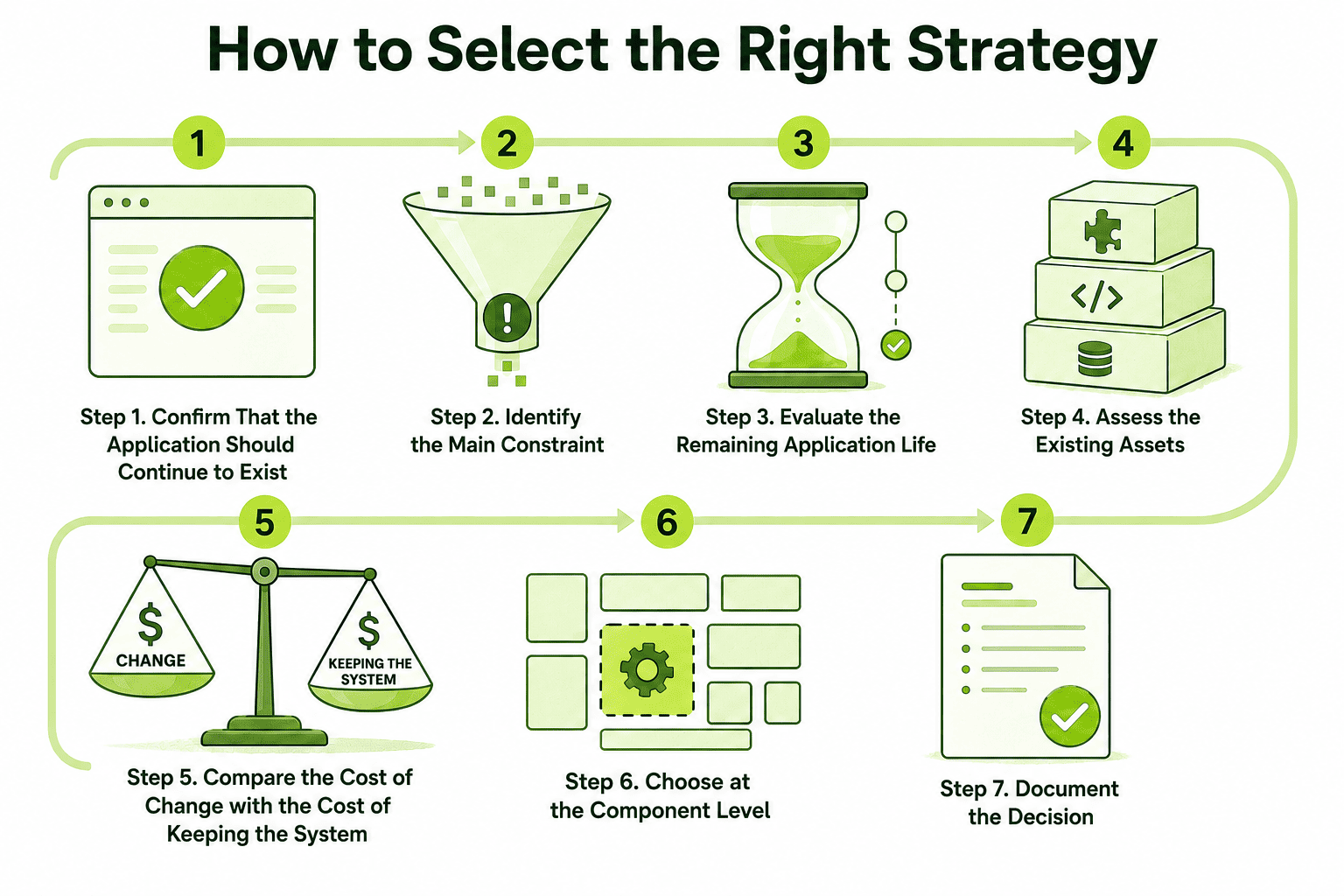
Image 1. Steps for сhoosing the right strategy
Step 1. Confirm That the Application Should Continue to Exist
Start by confirming that the application still serves an active business purpose. Review its users, operational or revenue value, regulatory role, duplicated capabilities, and expected remaining lifespan.
If the application provides limited value, Retire may be the appropriate choice. If the function remains necessary but custom software offers little business advantage, assess a commercial or SaaS product through Replace. Our guide to legacy application modernization explains the broader benefits and key implementation steps for applications that should remain in use.
Step 2. Identify the Main Constraint
The primary constraint helps narrow the initial options:
| Primary constraint | Strategy to evaluate first |
|---|---|
| Infrastructure or data-center deadline | Rehost |
| High operational burden | Replatform |
| Code-level technical debt | Refactor |
| Structural architecture limitations | Rearchitect |
| Implementation cannot be recovered or maintained | Rebuild |
| Required function is available as a standard product | Replace |
| Insufficient remaining business value | Retire |
This mapping creates a starting point rather than an automatic decision. Business criticality, dependencies, data requirements, security, cost, and delivery risk can change the final selection.
Step 3. Evaluate the Remaining Application Life
An application expected to operate for only a few more years rarely justifies extensive architectural work. Rehost, limited replatforming, or retirement can provide enough value without creating a long payback period.
A strategic application expected to support the business for many years can justify refactoring, rearchitecting, or rebuilding. The expected lifespan should be compared with the implementation timeline and the period required to recover the investment.
Step 4. Assess the Existing Assets
Review the source code, architecture, documentation, test coverage, domain knowledge, data quality, integrations, operational metrics, and security constraints. These assets determine how safely the existing system can be changed and how much of it can be preserved.
Poor documentation and limited knowledge of system behavior increase the risk of refactoring, rearchitecting, and rebuilding. In that case, the plan may need an initial discovery phase, dependency mapping, additional testing, or a staged replacement of individual components.
Step 5. Compare the Cost of Change with the Cost of Keeping the System
The comparison should include implementation, data migration, parallel operation, licenses, infrastructure, training, ongoing maintenance, incident costs, and the effect of the current system on development speed. Expected business value and avoided future costs should be assessed over the same period.
A lower initial budget does not always produce the lowest total cost. Rehosting can preserve expensive operating problems, while rebuilding can require more investment than the application’s remaining value supports. Our article on legacy system modernization cost explains the main cost drivers and typical expenses that should be included in the estimate.
Step 6. Choose at the Component Level
A single application does not always require one strategy. The front end may be rebuilt, business logic refactored, the database replatformed, and selected integrations replaced while stable components remain unchanged.
This component-level approach can reduce migration risk and avoid rewriting parts of the system that still work well. It requires clear boundaries, dependency mapping, and an agreed sequence for moving traffic and data.
Step 7. Document the Decision
The final decision should record the business driver, selected strategy and components, expected outcome, rejected alternatives, estimated effort, risks, dependencies, acceptance criteria, and planned review point.
This record makes the legacy modernization strategy traceable and gives technical and business stakeholders the same basis for approval. It should be reviewed when costs, requirements, dependencies, or the application’s expected lifespan change.
Before applying the selected legacy application modernization strategy across the entire system, validate it on a representative component with real dependencies and data. Compare the actual effort, performance, operational requirements, and cost with the original assumptions, then adjust the approach before expanding the work.
Common Strategy Selection Mistakes
Mistakes in selecting a legacy application modernization strategy usually occur when teams begin with a preferred technical approach before confirming the application’s business value, dependencies, technical condition, and expected lifespan.
Assuming Every Application Must Be Modernized
A portfolio assessment may show that an application should be replaced or retired. Applying a legacy application modernization strategy to a system with limited remaining value preserves unnecessary maintenance, licensing, and infrastructure costs.

Treating Rehost as the Final Outcome
Rehosting can meet an infrastructure deadline or reduce immediate migration risk, but it does not resolve limitations in the code or architecture. If the legacy application modernization strategy includes a later phase, its scope, budget, dependencies, and success criteria should be included in the roadmap from the beginning.
Confusing Refactor with Rearchitect
Refactoring improves the existing code and internal structure without fundamentally changing the architecture. Rearchitecting changes system boundaries, component interactions, deployment patterns, or the scaling model. Confusing the two leads to inaccurate estimates and unclear scope.
Choosing Rebuild Before Assessing Replace
A company can invest heavily in custom development for a standard business function already supported by an established product. Replacement options should be evaluated before approving a rebuild, including integration requirements, data migration, licensing, and required customization.
Replacing a Differentiating System with a Generic Product
A commercial platform can reduce maintenance but may also remove workflows or capabilities that create measurable business value. The assessment should separate standard functions that can be replaced from differentiating logic that should be retained or rebuilt.
Retiring an Application Based Only on Low Direct Usage
A system with few direct users may still support critical integrations, automated jobs, regulatory records, or downstream applications. Retirement requires dependency mapping, data retention planning, and confirmation that every supported function has another owner.
Applying One Strategy to the Entire Application
A legacy application modernization strategy does not need to apply one approach to every component. The front end, business logic, database, reporting layer, and integrations can have different technical conditions and business value. Using one strategy across the entire system can introduce unnecessary changes in stable areas while leaving the main constraints unresolved.
Selecting the Most Extensive Strategy as the Best Option
Rearchitecting or rebuilding is justified only when a lighter approach cannot achieve the required business outcome. Greater scope also increases cost, delivery time, migration risk, and the amount of system behavior that must be rediscovered and tested.
Do not approve a legacy application modernization strategy while system dependencies, data flows, business-critical behavior, or total cost remain based on assumptions. Incomplete evidence can lead to an unnecessary rebuild, unexpected migration work, or a modernized system that retains the original limitations.
Key Takeaways
The right choice among legacy modernization strategies depends on the application’s business value, remaining lifespan, technical constraints, available assets, and total cost. Rehost, Replatform, Refactor, Rearchitect, Rebuild, Replace, and Retire address different problems, and one application may require several approaches across its components.
The selected strategy should resolve a confirmed limitation, preserve valuable system knowledge, and define measurable outcomes, risks, dependencies, and acceptance criteria. Before approving the full scope, compare the cost of change with the cost of keeping the system and validate critical assumptions on a representative component.
If your team needs additional expertise or delivery capacity, review TechBar’s available engineering profiles. These pre-vetted specialists can join your team to assess legacy systems and implement the selected modernization strategy.

Dmytro Halkin COO
FAQs
-
Can multiple legacy modernization strategies be used for one application?
Yes. Different components can have different technical conditions, dependencies, and business value. A company might rebuild the front end, refactor core business logic, replatform the database, and replace a reporting component while keeping stable integrations unchanged.
-
What is the difference between Rehost and Replatform?
Rehost moves an application to new infrastructure with minimal changes to its code or architecture. Replatform introduces targeted changes to the runtime, database, operating system, or managed services to reduce operational effort or improve performance without redesigning the entire application.
-
How does the application’s remaining lifespan affect strategy selection?
An application expected to remain in use for a short period rarely supports the cost and risk of rearchitecting or rebuilding. Rehost, limited Replatform, or Retire may be more proportionate. Long-term strategic systems can justify more extensive legacy modernization strategies when the expected value exceeds the implementation and operating costs.
-
When should a company choose Replace instead of Rebuild?
Replace is usually more appropriate when an established product already supports the required function and custom software provides limited business advantage. Rebuild is more suitable when the application contains differentiating workflows, rules, or integrations that standard products cannot support without excessive customization.
-
What evidence should support the final modernization decision?
The decision should be based on verified dependencies, system usage, business criticality, technical condition, security constraints, remaining lifespan, and total cost. Teams should also test major assumptions on a representative component and compare the observed effort, performance, operational requirements, and cost with the original estimates.