Article Highlights
- A cloud migration readiness assessment evaluates applications, infrastructure, data, security, costs, governance, and operational readiness before migration.
- According to Flexera, 54% of organizations identify application dependencies as a major migration challenge.
- Successful migration requires clear business objectives, measurable outcomes, workload ownership, and a complete view of system dependencies.
- Total migration costs should include licensing, data transfer, parallel operations, training, support, and post-migration management.
- Each workload should receive a readiness status of Go, Conditional Go, or Not Ready before migration begins.
Cloud migration problems often begin before the first workload moves. Undocumented dependencies, incomplete cost estimates, licensing constraints, unclear ownership, and missing security controls can turn a technically successful migration into an expensive operational problem.
The Flexera 2026 State of the Cloud Report, based on responses from 753 cloud decision-makers and users, found that 54% identified application dependencies as a leading migration challenge. Another 44% reported difficulty assessing technical feasibility, while 43% struggled to compare on-premises and cloud costs. A cloud migration readiness assessment identifies these gaps before migration begins.
What Is a Cloud Migration Readiness Assessment?
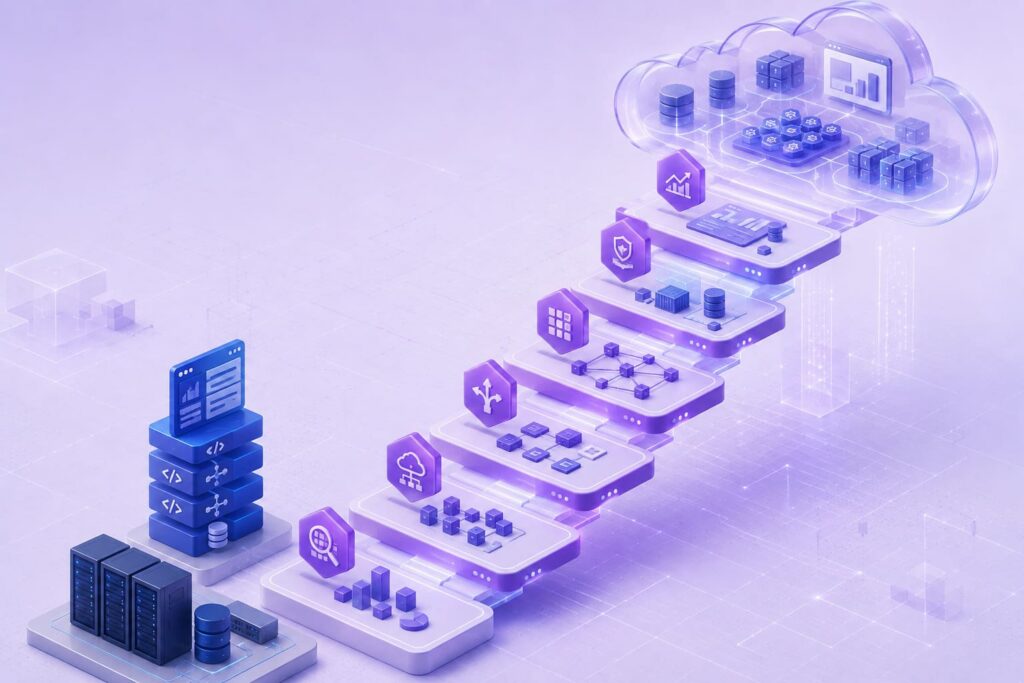
A cloud migration readiness assessment evaluates if an organization can move workloads to the cloud and operate them successfully after migration. It covers applications and infrastructure alongside business priorities, people, governance, security, finance, and operational processes.
The assessment should show how prepared each workload is and what must be resolved before migration begins.
It is important to note that a readiness assessment, migration strategy, and migration plan serve different purposes. The assessment establishes if the organization is prepared, the strategy defines the target approach, and the plan turns that approach into scheduled work.
| Process | Primary question | Expected result |
|---|---|---|
| Readiness assessment | Is the organization prepared for cloud migration? | Gaps, risks, prerequisites, and priorities |
| Migration strategy | What should move, where should it move, and which approach should be used? | Target architecture and workload decisions |
| Migration plan | Who will complete the work, when will it happen, and in what sequence? | Migration waves, owners, timelines, and cutover plans |
Why Readiness Assessments Get Skipped
Teams often treat an assessment as a delay between approval and execution. They may assume that existing knowledge of applications and infrastructure is sufficient, even when inventories and documentation are incomplete.
Responsibility is also divided across application, infrastructure, security, finance, and business teams. Without clear ownership, critical migration requirements can remain undocumented. A successful low-risk pilot does not confirm that connected production applications are equally ready.

Why Readiness Matters in 2026
Hybrid and Multi-Cloud Complexity
According to Flexera, 73% of organizations use hybrid cloud environments. A cloud migration readiness assessment must therefore account for connections between cloud platforms, on-premises infrastructure, SaaS products, data sources, and third-party services.
Greater Cost Accountability
Flexera also reports that 63% of organizations have a FinOps team, 49% use unit economics to measure cost per service, and 71% have a Cloud Center of Excellence or an equivalent function. These changes make financial ownership and cost measurement part of migration readiness rather than post-migration optimization.
AI and Data-Intensive Workloads
AI workloads introduce specific requirements for a cloud migration readiness assessment, including GPU capacity, storage, data movement, access controls, and cost forecasting. If AI is part of the cloud roadmap, these requirements should inform target capacity, service selection, and governance from the start.
Security and Regulatory Requirements
Data residency, encryption, identity architecture, backups, third-party risk, and industry regulations can restrict regions and cloud services. Identifying these requirements after architecture decisions have been made can lead to redesign, delays, or compliance gaps.
For teams looking to strengthen this capability, specialized support in cloud engineering services can help design landing zones, establish governance, and prepare workloads for safe and scalable migration.
Do not use a successful pilot migration as proof that the entire environment is ready. A simple workload may have few dependencies, limited data, and low compliance risk, while connected production systems can require a different architecture, operating model, and migration approach.
What to Check Before Cloud Migration
A cloud migration readiness assessment should evaluate business goals, applications, technical constraints, data, security, costs, and operating model together. A gap in any area can affect others: hidden dependencies can change migration order, licensing can reshape architecture, and data residency can limit regions.
The assessment should capture confirmed facts, open questions, risks, owners, and required actions.
1. Business Objectives and Success Criteria
The process starts with the business reason for migration. The team should define the problem, expected outcomes, sponsor, budget, timeline, and acceptable disruption. These factors guide all technical and financial decisions.
Success criteria should go beyond “workloads migrated” and may include deployment speed, availability, recovery time, cost per transaction, or data-center exit completion. Without clear metrics, success cannot be measured.
2. Application Portfolio and Dependencies
The inventory should include applications, databases, servers, APIs, jobs, file transfers, identity systems, vendors, and connected services. Each workload should have an owner, criticality, usage, latency needs, and downtime tolerance.
Dependency mapping shows what must move together, what needs temporary connectivity, and what can migrate independently. This is critical because missed dependencies can disrupt services or block migration sequences. According to Flexera 2026, 54% of organizations cite dependency visibility as a major challenge.
3. Technical Compatibility and Migration Options
The technical review covers OS, databases, middleware, networking, storage, performance, and legacy constraints. It also checks whether cloud services meet availability, latency, and scalability needs.
Based on this, workloads are initially grouped into rehost, replatform, refactor, repurchase, retain, or retire. This classification is refined later during detailed planning.
4. Data Readiness
The data assessment includes volume, location, sensitivity, growth, retention, backup, recovery targets, and residency rules. It also estimates transfer time and network requirements.
The team must define how data stays consistent during migration, including synchronization, validation, and cutover rules. Large or fast-changing datasets often determine migration order and timing.
5. Security and Compliance
Security review covers identity, access, encryption, logging, vulnerability management, incident response, backups, and compliance requirements. It also defines shared responsibility with the cloud provider.
6. Cost, Licensing, and Business Case
A cloud migration readiness assessment should evaluate total cost of ownership, not just infrastructure pricing. This includes current infrastructure, licenses, cloud resources, backups, DR, network traffic, migration tools, training, and parallel operations. Cost tracking, tagging, and budgeting must be defined before migration.
7. People, Governance, and Operations
This area evaluates whether the organization can operate in the cloud after migration. It includes skills, training, ownership, FinOps, support, monitoring, incident response, Infrastructure as Code (IaC) standards, and recovery testing.
No production workload should move without clear operational ownership. A cloud migration readiness assessment must define both technical readiness and operating model readiness to ensure long-term stability, cost control, and security.
Readiness is not a single pass-or-fail result for the entire organization. A cloud migration readiness assessment should classify workloads separately, since some may be ready to migrate while others require remediation, modernization, or a decision to remain in the current environment.
What Should the Assessment Deliver?
A cloud migration readiness assessment should produce documented decisions and preparation steps, not only describe the current environment.
| Deliverable | What It Should Include | How It Supports Migration |
|---|---|---|
| Current-State Assessment | Application and infrastructure inventory, dependency maps, owners, criticality, and baselines | Establishes a verified view of the environment and connected systems |
| Readiness Gap Register | Gaps, affected workloads, risks, priorities, owners, actions, and completion criteria | Identifies what must be resolved before pilot or production migration |
| Preliminary Workload Disposition | Initial recommendation to migrate, modernize, replace, retain, retire, or investigate | Prevents the assumption that every workload should move unchanged |
| Initial Business Case | Current TCO, projected cloud costs, migration costs, licensing, expected value, and assumptions | Supports funding decisions and tests financial feasibility |
| Cloud Foundation Requirements | Landing zone, identity, networking, security, logging, governance, cost allocation, and recovery | Defines the foundation required before production deployment |
| Prioritized Readiness Roadmap | Actions, owners, effort, dependencies, decision gates, and timing | Converts identified gaps into an ordered preparation plan |
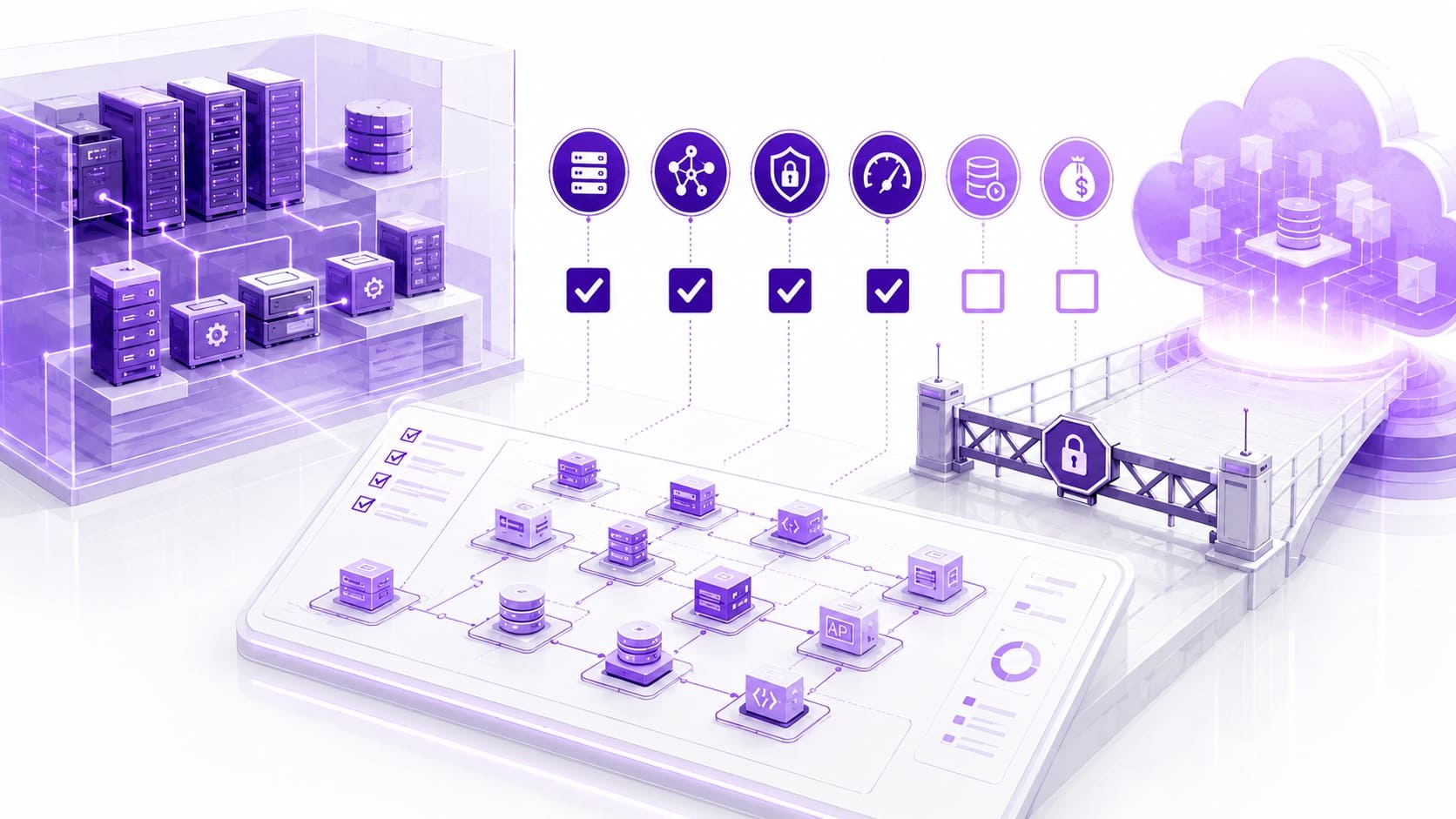
Assign each workload or migration wave a clear status: Go, Conditional Go, or Not Ready. A Conditional Go decision should state which gaps must be closed, who owns them, and what evidence is required before migration can proceed.
Key Takeaways
A cloud migration readiness assessment identifies the technical, financial, security, and operational gaps that must be resolved before workloads move. It should identify the technical, financial, security, and operational gaps that must be addressed before migration.
The outcome should be a clear view of workload readiness, documented risks, assigned owners, and a practical roadmap. Migration can proceed safely only when business objectives, costs, security controls, and operational responsibilities are defined.
Contact TechBar to assess your current environment and identify what needs to be addressed before migration begins. If your team needs additional technical capacity, explore our staff augmentation services to find experienced cloud engineers who can support assessment, planning, and implementation.

Bohdan Steblianko CEO
FAQs
-
Can a workload be technically ready for migration but operationally unprepared?
Yes. An application can run successfully in a cloud environment while its monitoring, access controls, backup procedures, incident response, and cost ownership remain undefined. A cloud migration readiness assessment should confirm that the organization can operate the workload safely after migration, not only that it can be deployed.
-
How do undocumented dependencies affect the migration sequence?
Undocumented connections between applications, databases, identity services, scheduled jobs, and external systems can prevent workloads from moving independently. If a dependent service remains on-premises, the team might need temporary connectivity, revised migration waves, or a different cutover approach. Discovering these dependencies late can cause service interruptions and unexpected costs.
-
When should a workload remain on-premises instead of moving to the cloud?
A workload should remain on-premises when migration would introduce unacceptable latency, licensing restrictions, regulatory issues, unsupported dependencies, or operating costs that outweigh the expected benefits. Some applications also depend on specialized hardware or are approaching retirement. The assessment should document the reason for retention and define when the decision should be reviewed.
-
How can a cloud migration readiness assessment prevent unexpected costs after cutover?
The assessment should compare current operating costs with projected cloud expenses under realistic usage scenarios. It must account for data transfer, software licenses, parallel environments, backup, disaster recovery, support, and ongoing engineering effort. Defined resource tagging, budgets, and cost ownership help the organization identify spending problems before they become part of the production environment.