Article Highlights
- Legacy system modernization cost typically ranges from $50,000 to $500,000 for standard business applications, while enterprise ERP or mainframe programs can reach $1 million to $10 million or more.
- Rehosting is usually the lowest-cost path at $40,000 to $150,000. A full rebuild can range from $500,000 to $10 million or more.
- Parallel infrastructure, knowledge transfer, and compliance revalidation can add $100,000 to $500,000 or more to the base estimate.
- Technical debt can consume up to 50% of an IT budget before modernization begins.
- Legacy maintenance costs can increase by 10% to 20% each year, which means postponing the work has a measurable financial impact.
Legacy system maintenance costs compound at 10% to 20% a year. Hardware becomes scarcer after warranties expire, the pool of engineers who still know the platform shrinks as specialists retire, and vendor support contracts increase as vendors discontinue older product lines. Pegasystems estimates that the average large enterprise loses more than $370 million annually from failing to modernize. Doing nothing is not a neutral option. It is a cost decision that becomes more expensive with every year of delay. This guide breaks down legacy system modernization cost in 2026 by strategy and explains where the final number tends to exceed the initial quote.
Why the Cost Breakdown Matters
Vendors rarely quote legacy modernization as a single fixed project because the work can follow six very different strategies. Each strategy has its own scope, timeline, risk profile, and price range. A proposal that does not specify which of the six approaches it covers is difficult to compare with another estimate.
A clear breakdown of legacy system modernization cost helps teams:
- compare vendor proposals against realistic market ranges for the same strategy;
- separate development expenses from migration costs that apply across different approaches;
- decide which systems require rebuilding and which can be rehosted, replaced, retained, or retired;
- account for data migration and compliance revalidation before the budget is approved.
What Determines Legacy System Modernization Cost?
1. Modernization Strategy Chosen
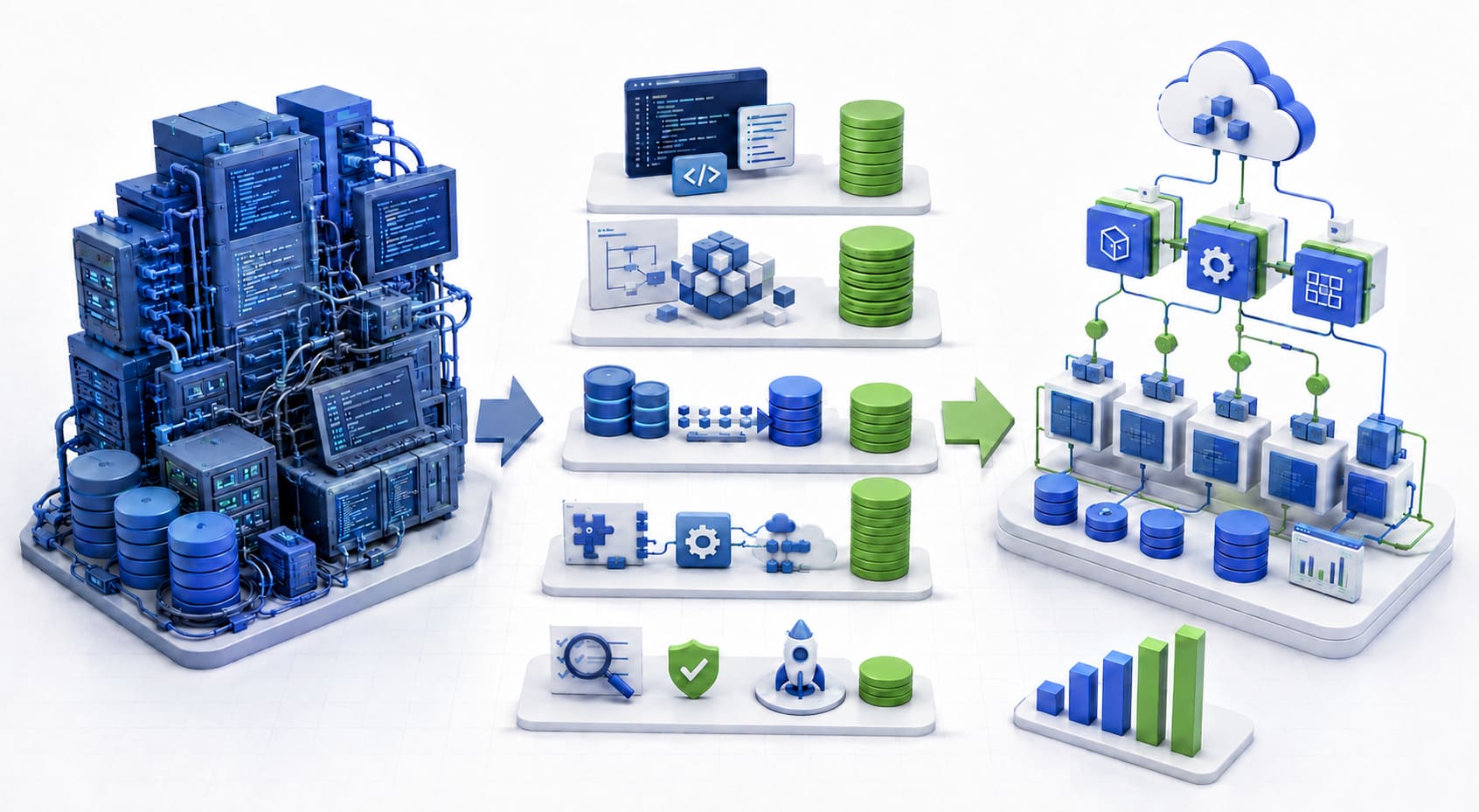
The 6 Rs framework covers the spectrum from moving an application with minimal code changes to rebuilding it from the ground up. Cost and effort generally increase from rehosting through rebuilding. Most application portfolios require a combination of approaches. A company might rehost low-risk systems, refactor applications affected by technical debt, and retire software that no longer provides meaningful business value.
2. System Complexity and Integrations
A standalone internal tool costs far less to modernize than a mainframe connected to many downstream systems. Every point-to-point connector, batch export, and proprietary adapter must be mapped, assessed, and either replicated or replaced. In complex environments, this discovery work can become a major part of the legacy system modernization cost.
3. Data Migration and Compliance
Data cleanup, validation, and regulatory revalidation add cost regardless of the modernization strategy. This work is especially significant in FinTech and HealthTech, where audit trails, access controls, patch currency, and requirements such as SOX, HIPAA, or FDA compliance must be addressed as part of the project.
4. Team and Talent Availability
Engineers who can safely work with a 20-year-old COBOL or AS/400 codebase are increasingly difficult to find. Their availability affects both the project estimate and the time required for knowledge transfer. Engineers who work with current technology stacks are generally easier to source. After a refactor or rebuild is complete, this can reduce ongoing staffing costs compared with maintaining the original system.
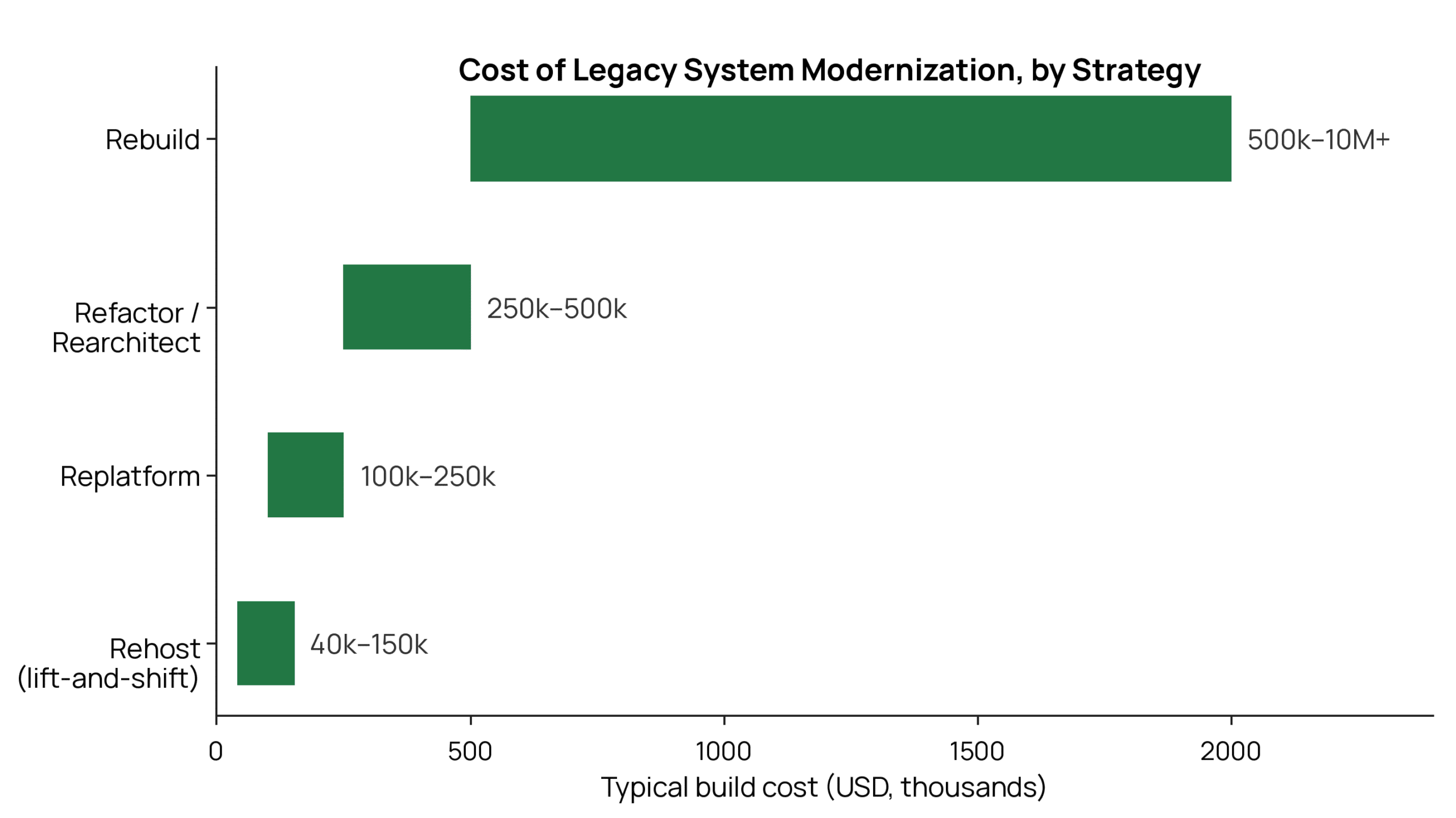
Image 1. Typical build cost ranges by modernization strategy, based on 2026 market data.
The 6 Rs Framework Compared
The table below compares typical build costs, expected timelines, and the situations where each modernization strategy is most appropriate. These ranges provide a practical starting point for estimating legacy system modernization cost, but they do not include every migration, compliance, or transition expense.
| Strategy | Typical Cost | Timeline | Best For |
|---|---|---|---|
| Rehost (lift-and-shift) | $40,000–$150,000 | 2–4 months | Low-risk systems where infrastructure, not code, is the problem |
| Replatform | $100,000–$250,000 | 3–6 months | Systems that need cloud-native performance gains without a full rewrite |
| Refactor / Rearchitect | $250,000–$500,000+ | 6–12 months | Codebases with real technical debt that’s slowing every future change |
| Repurchase (move to SaaS) | Subscription-based | 2–6 months | Commodity functions where a modern SaaS product already does the job |
| Rebuild | $500,000–$10M+ | Cell 5.9+ months | Systems where the cost of patching outweighs starting over |
| Retire / Retain | Near-zero build cost | N/A | Systems nobody meaningfully uses, or genuinely not ready to move yet |
Regardless of the selected strategy, the budget should include parallel infrastructure during cutover, knowledge transfer from experienced employees, and compliance revalidation. Together, these items can add $100,000 to $500,000 or more to the base estimate.

Benefits and Hidden Costs
Benefits
Lower ongoing maintenance: Modern systems do not carry the same annual cost increase associated with aging platforms and scarce components.
Easier hiring: Engineers with experience in current technology stacks are easier to find and retain than specialists in older proprietary systems.
Compliance built into the system: Refactored or rebuilt applications can include current audit, access, and security requirements in their architecture.
Room for AI and integration: A modernized architecture can actually connect to today’s tools, including the Data & AI capabilities a legacy monolith usually can’t support.
Proven execution: TechBar’s engineers hold Google Cloud, AWS, and Azure certifications across cloud and legacy modernization work, see who we are.
Avoid modernizing the entire application estate at once. Rehosting low-risk systems first can help the team test the process and create a clearer basis for later refactoring or rebuilding decisions.
A lift-and-shift migration moves an application to new infrastructure, but it does not correct a monolithic codebase or rigid data architecture. If the architecture is the main constraint, rehosting alone will not resolve it.
Technical debt can already consume up to 50% of an IT budget. A legacy system modernization cost estimate that ignores existing debt is more likely to exceed its approved budget.
Hidden Costs
Parallel infrastructure: Old and new environments often run at the same time during cutover, sometimes for several months.
Knowledge transfer: Institutional knowledge held by experienced employees must be documented before they leave the business or project.
Compliance revalidation: Systems regulated by SOX, HIPAA, or FDA requirements can require a full audit cycle after modernization.
Data migration errors: Years of duplicated, inconsistent, or incomplete records increase the effort required for cleanup and validation.
Checklist Before You Commit to a Number
- Inventory the legacy estate and assign a proposed strategy to each system: rehost, replatform, refactor, repurchase, rebuild, retain, or retire.
- Map every integration point and downstream dependency before defining the project scope.
- Request separate estimates for development, data migration, and compliance revalidation.
- Confirm which regulatory requirements apply before approving the budget.
- Include parallel infrastructure costs for the cutover period.
- Decide whether the work needs in-house ownership or outside execution capacity. TechBar’s staff augmentation and talent pool can place vetted cloud and legacy engineers within 1–2 weeks.
- Set the maintenance and support budget for the new system before approving the final legacy system modernization cost.
“The estimate that gets a client in trouble is never the build cost. It’s the compliance revalidation and data migration nobody separately priced out.”
– Dmytro Halkin, COO, TechBar
Key Takeaways
The difference between a $50,000 modernization project and a $2 million program usually comes from the strategy the system requires and whether data migration, integrations, compliance, and transition work were estimated separately from development. Teams that classify each application before requesting proposals have a clearer basis for comparing scope and building a defensible budget.
A realistic legacy system modernization cost should cover the complete transition, not only the engineering work required to change or replace the application. The estimate should also account for the period when both environments operate, the people responsible for transferring knowledge, and the validation required before the new system can support live operations.
TechBar’s Legacy Modernization and Cloud Engineering teams scope exactly this kind of decision and can staff the execution with senior nearshore engineers within 1–2 weeks. Talk to our team about your legacy estate before you commit to a number.

Dmytro Halkin COO
FAQs
-
How can a company estimate legacy system modernization cost before technical discovery?
An early estimate can be based on application size, age, architecture, data volume, integration count, compliance requirements, and the likely modernization strategy. It should remain a range until technical discovery maps dependencies, assesses code quality, and confirms the migration scope.
-
Which modernization approach usually costs the least?
Rehosting usually has the lowest initial build cost because it moves the application with limited code changes. It does not address deeper architectural or code-quality issues, so the lowest upfront estimate does not always produce the lowest long-term cost.
-
What costs are most often missing from a modernization proposal?
Data cleanup, parallel infrastructure, compliance revalidation, testing, knowledge transfer, user training, and post-launch support are often estimated separately or omitted from an early proposal. These items should be reviewed before the budget is approved.
-
How should a business compare modernization cost with the cost of keeping a legacy system?
Compare the project estimate with several years of maintenance, vendor support, infrastructure, incident recovery, slow delivery, security remediation, and specialist staffing. The analysis should also include the business impact of limitations that prevent new integrations, product changes, or regulatory compliance.