

Article Highlights
- Around 69% to 70% of digital transformation efforts fail to deliver meaningful results, and only about 35% achieve their stated goals, according to McKinsey and BCG.
- The strongest candidates for business process digitization are high-volume, repetitive, rule-based, and error-prone processes, rather than simply the most visible ones.
- Frameworks such as RICE and the Impact vs. Effort matrix turn the question of what to digitize first into a scored ranking that teams can explain and defend.
- Data and system cleanup should come before automation because automating a broken process increases the speed and scale of existing errors.
- Organizations allocate only about 10% of transformation budgets to change management on average, which affects adoption rates.
Global spend on digital transformation is projected to reach $3.4 trillion, yet McKinsey puts the failure rate at 69%, and Gartner estimates that 85% of initiatives never scale past a pilot. Technology is rarely the main problem. Many transformations fail because teams digitize whichever process receives the most attention instead of the one that has the greatest effect on revenue, cost, or risk. This guide explains how to score and sequence business processes so that business process digitization investment goes where it can deliver value first.
Why Prioritization Decides Whether Transformation Works
Digital transformation often fails because of sequencing, alignment, and a lack of discipline about what should wait. When technology and business teams are not aligned on priorities, execution becomes fragmented, requirements continue to shift, and budget is spent rebuilding work that should have been scoped correctly from the start. A clear business process digitization method requires every candidate process to meet the same criteria before it earns a place on the roadmap.
Done well, prioritization:
- replaces opinion-driven roadmaps with a scored, defensible ranking;
- surfaces quick-win processes that build stakeholder trust and help fund larger initiatives;
- identifies which processes require data or system cleanup before automation;
- keeps the transformation program connected to business outcomes rather than specific tools.
What Determines Priority
1. Business Impact
Start with what the process currently costs the business in cycle time, error rate, headcount, or lost revenue, then estimate what digitizing it could recover. Processes such as accounts payable, customer onboarding, and order fulfillment are common early candidates because their effect on cycle time is easier to measure and explain to a budget owner. Business process digitization should begin where the expected operational or financial impact is clear.
2. Process and Data Readiness
A process that is undocumented, inconsistent, or dependent on fragmented data platforms is not ready for automation. It requires preparation first. Sequencing matters because data infrastructure and system integrations should be improved before automation begins. Deploying automation or AI on top of messy, disconnected data leads to unreliable results at a greater speed.
3. Volume and Frequency
The clearest automation candidates are repetitive, high-volume, and rule-based. Examples include data entry, invoice matching, and approvals that follow predictable logic with minimal judgment. High frequency allows small time savings per task to compound into significant annual returns. For this reason, volume is one of the fastest ways to separate strong business process digitization priorities from stakeholder preferences.
4. Risk and Compliance Exposure
Some processes need to move up the list regardless of projected ROI because they carry regulatory or error risk. Examples include a manual step in a HIPAA-covered workflow or a finance process connected to PCI DSS requirements. The main question is how quickly the process can be digitized safely. TechBar engineers address this distinction in regulated sectors such as HealthTech and FinTech, where compliance exposure can outweigh cost-benefit scoring.
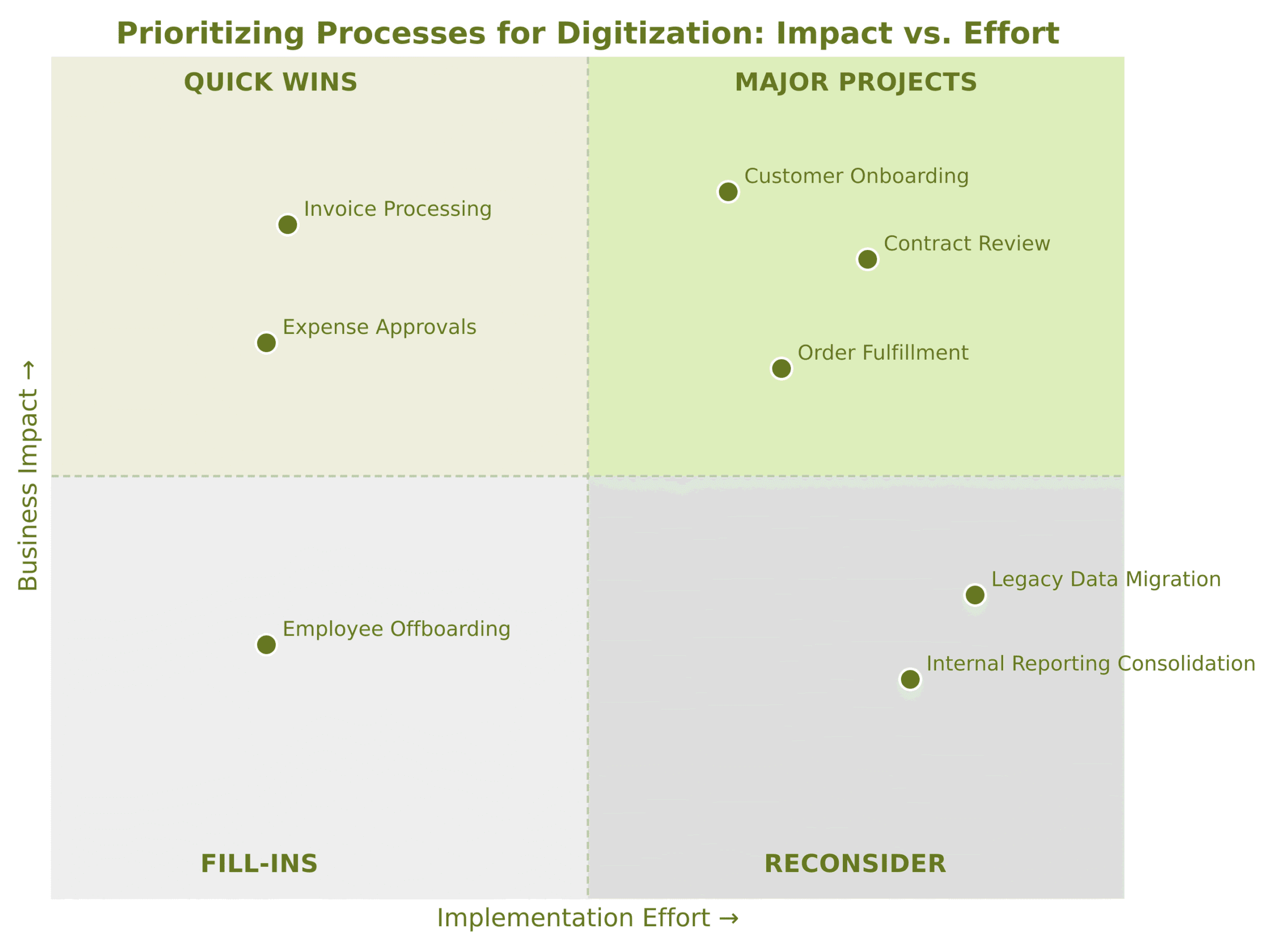
Image 1. Example impact vs. effort mapping of common business processes.
Prioritization Frameworks Compared
Different frameworks suit different team sizes, decision cycles, and levels of complexity. The table below compares how each method works and where it is most useful. Applying the same framework across every candidate gives teams a consistent basis for ranking business process digitization initiatives.
| Framework | How It Works | Best For |
|---|---|---|
| ICE | Score Impact × Confidence × Ease | Small teams, fast go/no-go calls on a short list |
| RICE | (Reach × Impact × Confidence) ÷ Effort | 10+ initiatives, needs a transparent, defensible ranking |
| Impact vs. Effort Matrix | Plot each process on a 2×2 grid | Workshops with multiple stakeholders who need a visual, shared reference |
| WSJF (Weighted Shortest Job First) | Cost of Delay ÷ Job Size | Time-sensitive processes where waiting has a measurable cost |
No single framework is correct for every organization. The goal is to choose one, apply it consistently to every candidate process, and be prepared to defend a low score even when a stakeholder strongly supports the initiative.

Benefits and Common Pitfalls
Benefits
Defensible decisions: A scored ranking provides a stronger basis for stakeholder discussions than individual opinions.
Early trust and budget: Quick wins show that the transformation program can produce results before the team requests a larger investment.
Less wasted spend: Disciplined prioritization keeps budget away from visible but low-impact initiatives outside the organization’s core needs.
A living roadmap: Scored business process digitization priorities can be ranked again as business conditions change instead of remaining fixed in a plan that becomes outdated.
Vetted execution capacity: TechBar engineers hold Google Cloud, AWS, and Azure certifications across cloud, data, and legacy modernization.
Start with three to five genuine quick-win processes that combine high impact with low effort. Early results can build support and secure budget for larger initiatives.
Do not automate a broken process. If a workflow is undocumented or inconsistent, digitizing it will reproduce the same mistakes faster and at a greater scale.
Review the roadmap every quarter. A process that had a low priority six months ago can move up the list after a compliance deadline, cost increase, or new system dependency appears.
Common Pitfalls
HiPPO-driven roadmaps: Prioritizing according to the highest-paid person’s opinion instead of scored evidence weakens the entire process.
Underfunded change management: Organizations allocate roughly 10% of transformation budgets to change management on average, which is often insufficient for effective user adoption.
Skipping the data prerequisite: Automating fragmented data platforms is one of the common reasons pilots fail to move beyond a proof of concept.
Treating prioritization as a one-time event: A ranking created at kickoff and never reviewed can stop reflecting business conditions within a quarter.
Checklist Before You Build the Roadmap
- Map core processes from start to finish and gather volume, frequency, cost, and error-rate data for each one.
- Score every candidate process on business impact and implementation effort using one consistent framework.
- Identify processes that need data cleanup or system integration before automation work can begin.
- Separate compliance-driven processes that require immediate action from opportunity-driven candidates.
- Select three to five quick wins to launch first and build stakeholder trust.
- Decide which processes need in-house ownership versus outside execution capacity — TechBar’s staff augmentation and talent pool can place vetted engineers into the roadmap within 1–2 weeks.
- Set a recurring quarterly review to score the business process digitization backlog again as conditions change.
“The teams that get transformation right aren’t the ones with the biggest budget. They’re the ones disciplined enough to say no to the process that isn’t ready yet.”
– Bohdan Steblianko, CEO, TechBar
Key Takeaways
Organizations that achieve better results from digital transformation focus on sequencing. Scoring processes according to impact, readiness, volume, and risk turns a long list of requests into a practical order of work. Quick wins come first to build trust and support the program. Data and system prerequisites are addressed before automation, while compliance-driven processes move up the list even when their projected ROI is lower.
TechBar’s Legacy Modernization and Software Product Engineering teams help companies define business process digitization priorities before the roadmap is finalized. Once the sequence is clear, senior nearshore engineers can support the implementation across data, cloud, modernization, and product engineering work.

Bohdan Steblianko CEO
FAQs
-
Which business process should a company digitize first?
reliable data, and manageable implementation effort. A high-impact, low-effort process can provide measurable results early and give the team evidence for later business process digitization decisions.
-
Should a process be improved before it is digitized?
Yes, if the workflow is inconsistent, poorly documented, or dependent on fragmented data. The team should first remove unnecessary steps, define ownership, standardize decision rules, and address data issues. Digitizing the existing workflow without this preparation can preserve the same inefficiencies in a new system.
-
How can teams compare compliance priorities with revenue opportunities?
Use separate scoring criteria for financial impact and risk exposure, then define a minimum threshold for regulatory, security, or operational risk. A process that protects the company from a serious compliance failure can move ahead of a higher-revenue opportunity even when its direct ROI is lower.
-
How often should a business process digitization roadmap be reviewed?
A quarterly review is appropriate for many organizations. The roadmap should also be reassessed after a major compliance change, cost increase, system replacement, acquisition, or shift in business strategy. The same scoring framework should be used so changes in priority remain clear and defensible.